

My 3-3-3 Declutter Experiment
Last year, I ran a small experiment that ended up reshaping how I think about ownership, taste, and even discipline. The rule was simple: for three months, live with only 33 items of clothing.

A few years ago, I ran a small experiment that ended up reshaping how I think about ownership, taste, and even discipline.
Inspired by Project 333.
The rule was simple: for three months, live with only 33 items of clothing.
That includes shoes, outerwear, accessories, everything you wear publicly.
The only exceptions were things like sleepwear, underwear, workout clothes, and a few necessary edge cases.
Anything else? Locked out.
At first, it sounded almost ridiculous.
But that was exactly the point.
Why I Tried It
The motivation wasn’t aesthetic. It was behavioral.
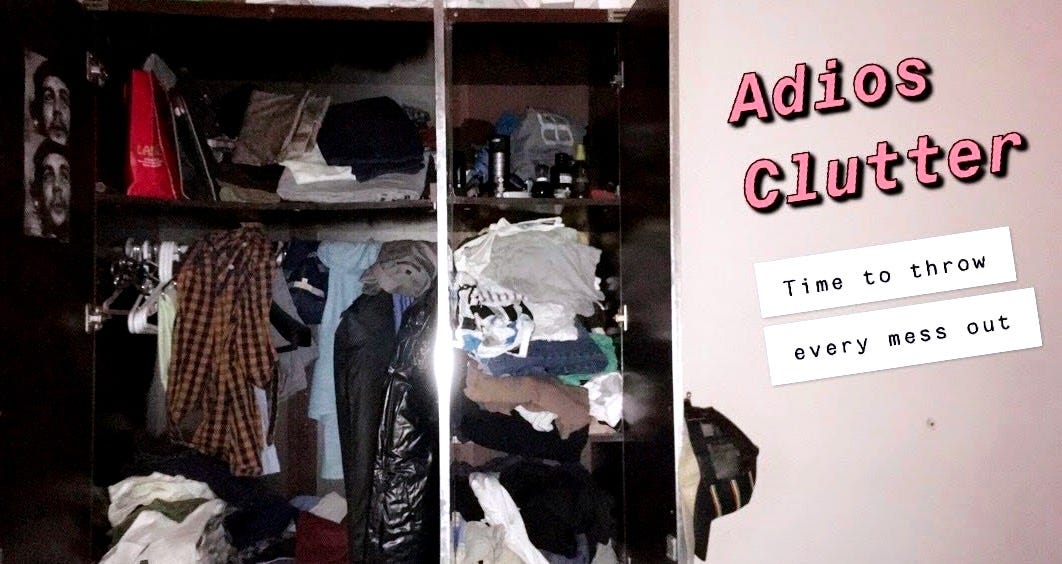
My wardrobe had quietly turned into clutter with no real system.
I noticed I was making decisions I didn’t need to make every morning.
I wanted constraints because freedom without structure often becomes noise.
And honestly, I was curious if less would feel like loss… or clarity.
So I set the timeframe: October 1 to December 31.
And I stuck to it.
Locked in. Committed af!
Mostly…
A few exceptions slipped in (holiday events have a way of testing philosophy), but the system held. What surprised me wasn’t how hard it was at the start—it was how quickly it stopped feeling like a challenge at all.
It became normal.
Then it became useful.
Then it became uncomfortable to imagine going back.
What Boundaries Actually Do
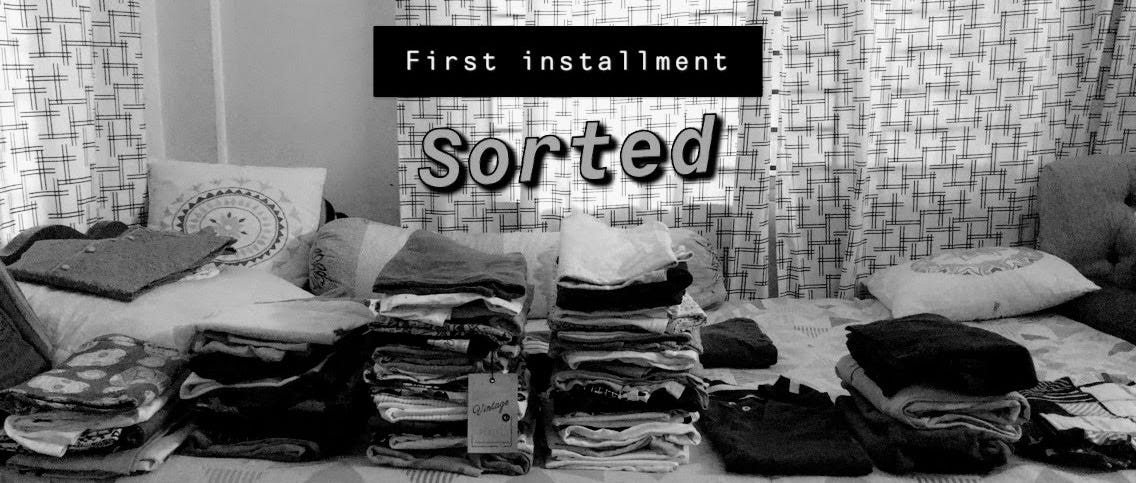
👇🏼
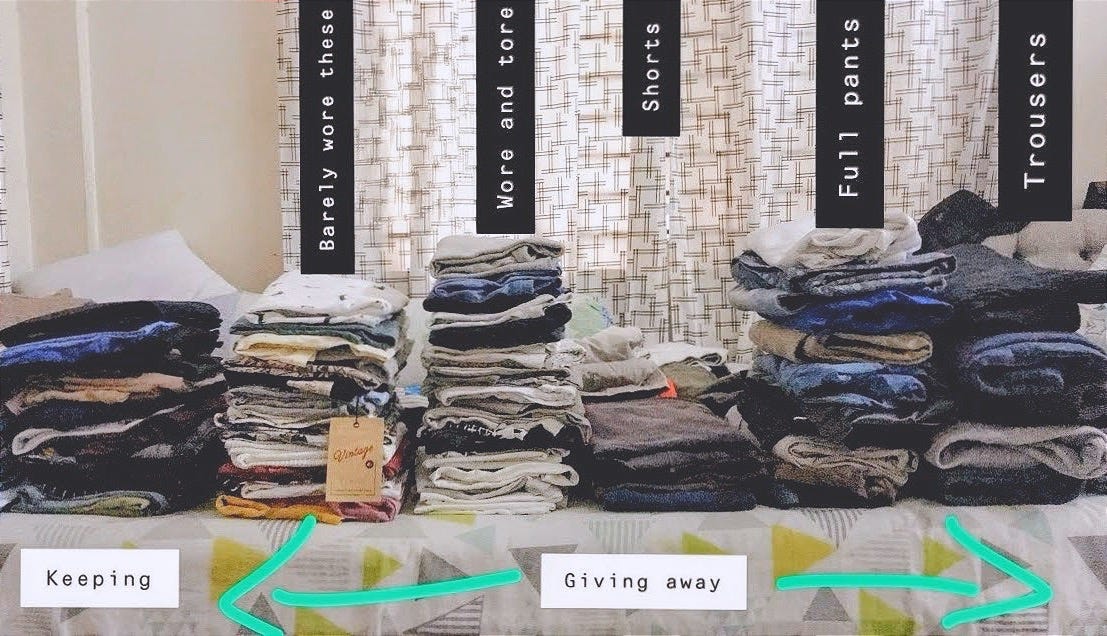
We usually treat “less choice” as restriction. But real-world experience shows something different: boundaries don’t just limit you, they reveal you.
Boundaries reduce decision fatigue
Most people underestimate how much mental energy is wasted on trivial choices.
A large closet doesn’t give freedom. It creates micro-conflicts:
What fits?
What matches?
What feels right today?
With fewer options, the noise disappears. The decision becomes automatic.
And the mind gets to move on to things that actually matter.
There’s a reason high-performing people often wear variations of the same outfit.
It’s not style—it’s cognitive efficiency.
Boundaries clarify what actually matters
When everything is available, nothing feels essential.
But when you’re forced into limits, something interesting happens: you start identifying your real preferences.
Not the aspirational ones. The actual ones.
In my case, I found:
I had 4–5 pieces that did most of the heavy lifting
A large portion of my wardrobe was “backup identity”
Style became simpler, not smaller
It stops being about what you own, and starts becoming about what you repeatedly choose.
Boundaries unlock creativity
Orson Welles once said,
“The enemy of art is the absence of limitations.”
He wasn’t being poetic. He was describing how creativity works.
When you remove infinite options, you’re forced to design within constraints. And constraints create identity.
Outfits became combinations, not consumption.
Style became expression, not accumulation.
Ironically, having less made my personal style more consistent, not less interesting.
Boundaries create freedom (the real kind)
This is where it gets counterintuitive.
You expect restriction. What you get is relief.
Mornings became faster
Laundry became predictable
Mental clutter reduced
Spending dropped without effort
But the biggest shift was psychological: I stopped negotiating with my closet.
No “maybe I’ll wear this someday.”
No emotional attachment to unused things.
No silent guilt sitting on hangers.
Just clarity.
And clarity feels like freedom once you’ve lived without it.
What This Really Was About
THE EXPERIMENT WAS NEVER ABOUT CLOTHING!
It was about exposure therapy for consumption.
We accumulate more than we need not because we’re careless, but because the system rewards accumulation. More options, more identity, more noise disguised as lifestyle.
But at some point, ownership stops being helpful and starts becoming maintenance.
And maintenance is just disguised fatigue.
Where This Spills Into Real Life
The real insight didn’t stay in the wardrobe.
It expanded.
How I design my work
How I structure my time
How I choose projects
Even how I think about attention
The principle is simple:
If everything is important, nothing is.
So I started applying light constraints everywhere:
fewer tools, fewer commitments, fewer parallel goals.
Not because minimalism is trendy—but because focus is undefeated.
If You Try It
Don’t treat it like a lifestyle shift.
Treat it like a short experiment.
Three months. Fixed rules. No philosophical pressure.
Just observe what happens when your choices shrink but your awareness expands.
Worst case, you learn nothing and go back.
Best case, you realize how much of your life was running on unnecessary clutter.
And once you see it, it’s hard to unsee.
Clutter doesn’t just live in spaces. It lives in decisions.
And removing it doesn’t make life smaller.
It makes it sharper.
That’s all for today. Until next one

Book A Free Discovery Call