

The Placebo Effect
Explore how beliefs shape health outcomes through the placebo and nocebo effects, emphasizing the power of positive thinking and self-narrative in personal well-being.

📌 TL;DR
A man died on schedule from a cancer diagnosis — except he never had cancer. His belief killed him. Your brain doesn’t distinguish between what’s real and what you’ve convinced it is real.
Every time you say “I’m always tired” or “nothing works for me,” you’re not observing — you’re programming. Placebo proves your brain can heal you; nocebo proves it can also destroy you.
The one move: replace your most-repeated health story with something directional, and let your brain do what it’s already trying to do — help you.
The Doctor Gave Him 3 Months. He Died On Time. There Was No Cancer.
A man went to the doctor.
Tests came back. The doctor sat him down.
Liver cancer. Three months to live.
He went home. Told his family. Said his goodbyes. Stopped making plans.
His body started shutting down — exactly the way cancer patients’ bodies do.
Three and a half months later, he was dead.
Then they did the autopsy.
No cancer.
A tiny, harmless tumour that would never have killed him. He could have lived another 30 years. Gone to his daughter’s wedding. Watched his grandkids grow up. Eaten biryani on Eid for three more decades.
But he didn’t.
Because he believed he was dying.
And his body… agreed.
Stop. Breathe.
Because that’s not a horror story. That’s not some rare medical freak case.
That is your life — happening right now — in smaller, quieter ways. Every single day.
And once you see it, you can’t unsee it.
Why This Actually Matters To You
Here’s the honest answer.
You are probably walking around with beliefs about yourself that are slowly making your life smaller.
“I’m always tired.”
“I’m not the kind of person who succeeds at this.”
“My body is broken.”
“Nothing ever works for me.”
You say these things like they’re observations. Like you’re reading the weather.
You’re not reading the weather. You’re making it.
This isn’t an abstract science lecture. This is about the invisible script running in your head — and what it’s actually doing to your body, your energy, your life.
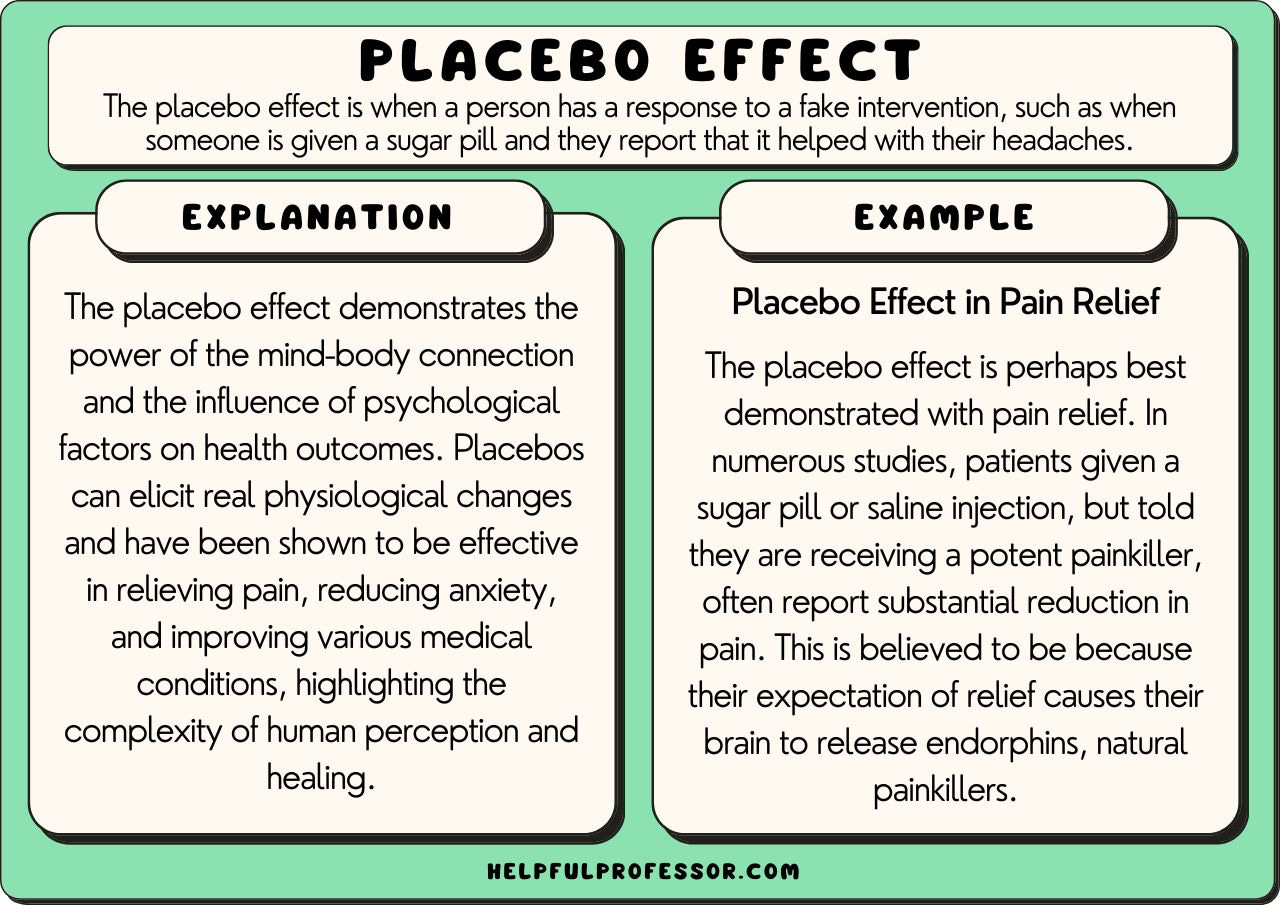
What Is The Placebo Effect? (Real Talk)
Forget the textbook definition.
Here’s what it actually is: Your brain gets fooled into healing you.
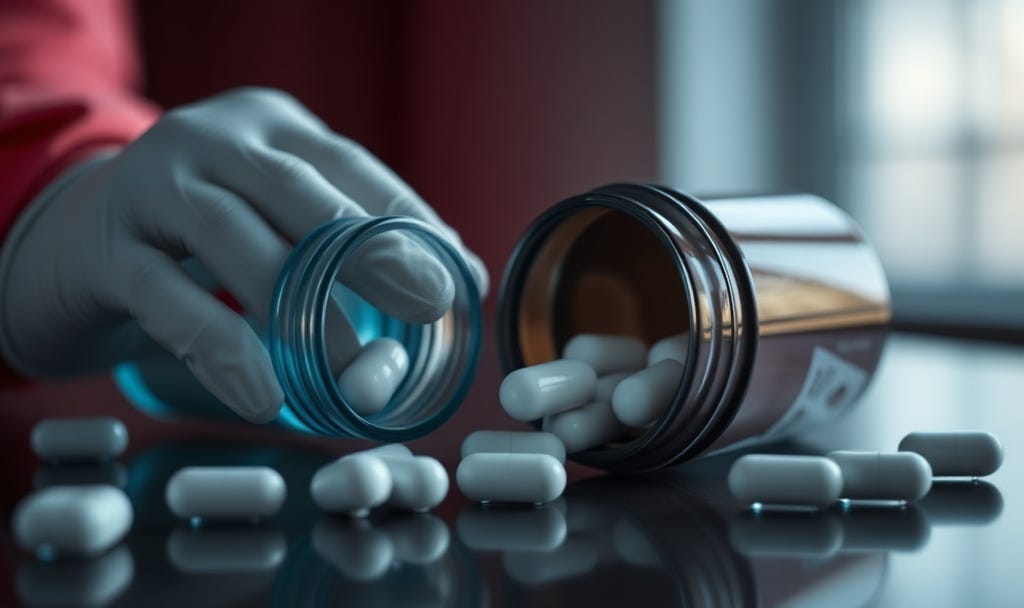
A doctor gives you a sugar pill. Tells you it’s medicine. You believe it. And then — genuinely, measurably — you start getting better.
Less pain. Better sleep. More energy.
The pill did nothing. Your brain did everything.
Harvard studied this. Dartmouth studied this. Decades of clinical trials keep confirming the same thing:
What you believe about your treatment changes what your treatment does.
Now apply that sentence to your actual life.
How This Shows Up In Real Life
You know that feeling when you’re sick — fever, body aches, can’t move — and your mum walks in with a hot bowl of soup?
Before she even hands it to you, something shifts. Your shoulders drop. Your body relaxes. You feel… slightly better.
The soup hasn’t entered your body yet.
But you’re already healing.
That’s placebo.
Your brain saying: “Okay. Someone’s taking care of me. I can ease up.”
Or this one.
You’ve had a brutal headache all day. You take a paracetamol. 20 minutes later — relief.
Except studies show paracetamol takes at least 45 minutes to absorb.
You felt better before the medicine could have done anything physically.
Your brain anticipated. And then it delivered.
Or think about the last time you Googled your symptoms at midnight.
You started with “mild headache.”
By 2am you had brain tumour, meningitis, and some rare condition last documented in 1987.
And then — didn’t you start feeling those things? A bit of neck stiffness.
Some light sensitivity. Suddenly your vision felt weird.
The internet didn’t give you a disease.
YOUR BELIEF DID.
The Dark Side Nobody Talks About
Here’s where it gets uncomfortable.
If belief can heal you, it can also hurt you.
Researchers call this the nocebo effect. Same brain. Same mechanism. Opposite direction.
There’s a famous experiment where participants were told a new medication might cause nausea, headaches, and fatigue.
Half of them weren’t even taking the real medication — they were on sugar pills.
They still reported nausea, headaches, and fatigue.
Read that again.
People got sick from a pill that contained nothing. Because they expected to get sick.
And here’s the one closest to home.
In a factory in 1960s America — dozens of workers started falling sick. Dizzy. Vomiting. Nausea. They were convinced a mysterious bug was biting them.
The CDC flew in. Tested everything. Air quality, surfaces, food, water.
Nothing.
No bug. No toxin. No contamination.
One person got “sick.” Started a rumour. The rumour spread. And belief — pure, shared, collective belief — made an entire factory of adults physically ill.
No bug. Just belief.
So here’s the real question: What are you believing?
Right now. About your body. Your health. Your capacity to get better.
Because here’s what I need you to understand:
You are not just describing your reality. You are building it.
Every time you say “I’m always tired” — your brain files that as a standing instruction. Stay tired. This is who we are.
Every time you say “I’ve tried everything, nothing works” — your brain stops looking for solutions. Case closed. File sealed.
You’re not complaining. You’re programming.
And your brain is incredibly obedient. It will work hard to prove you right. Even when proving you right means keeping you sick, tired, and stuck.
What Do You Actually Do With This?
This is not about replacing your doctor with positive affirmations. Please go to the doctor.
This is about understanding that alongside whatever treatment or habit you’re working on — your belief system is either helping or sabotaging you.
Here’s how to stop sabotaging yourself:
1. Stop narrating your worst fears out loud.
Every time you list your symptoms to five different people — you’re not seeking comfort. You’re reinforcing the signal. Vent less. Observe more.
2. Understand what you’re doing and why.
Whether it’s a supplement, a diet, a medication, a workout plan — know the reason behind it. When your brain understands why something works, it gets on board. That alignment alone changes outcomes.
3. Replace the broken record.
Pick the one sentence you repeat most about your health or energy.
“I’m always exhausted.”
“I can never lose weight.”
“I don’t sleep properly.”
Don’t delete it. Replace it. With something directional. Not fake. Just forward-looking.
“I’m working on my energy. I’m figuring this out.”
Say it until it stops feeling like a lie.
4. Control what you feed your brain before bed.
Late-night doom scrolling.
Health anxiety rabbit holes.
Reading everything that could go wrong.
This is nocebo territory.
Your brain is most impressionable before sleep.
What you put in, it processes through the night. Guard that window.
The Takeaway That Actually Matters
The man who died of a diagnosis he didn’t have — his tragedy isn’t that he received bad news.
His tragedy is that he never questioned it.
He accepted the story completely. And his body wrote the ending.
You have stories running about yourself right now. About your body, your energy, your capacity, what’s possible for you.
Some of those stories are true. Some were handed to you by a doctor, a parent, a bad experience, a late-night Google spiral — and you just… kept them.
The placebo effect is proof your brain is already trying to help you. Already running a healing programme in the background. Already on your side.
The question is
whether the story you’re telling it is working with that programme — or against it.
Your one move this week:
Write down the one sentence you repeat most about your body or your health. The one you say to friends, to yourself, in your head at 11pm.
Look at it.
Ask yourself: Is this a fact? Or is this a story I’ve been telling so long it became one?
Then write the next version. Not delusional. Just one step forward from where you are.
Do that for 7 days. See what your brain does with it.
If this hit different — send it to someone who needs to hear it. Sometimes one sentence changes everything.
That’s all for today. Until next one
Book A Free Discovery Call 👉🏼 1:1 Call with Asif Azad